Featured

The Business Problem

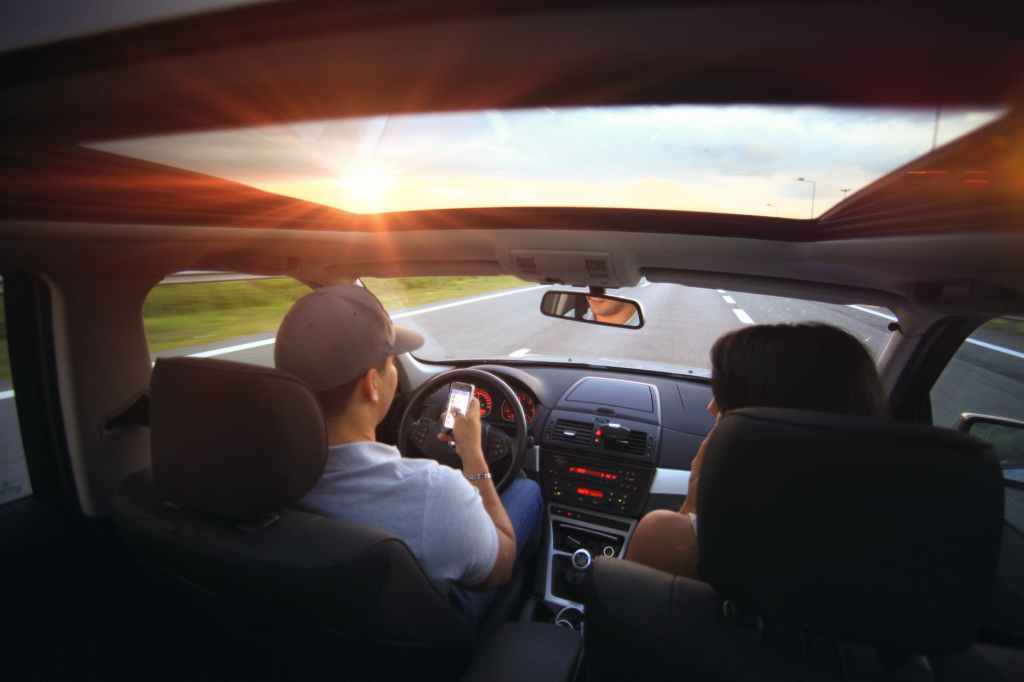
The problem that can be solved by self driving cars is car crashes caused by human errors. Many car crashes in the US particularly, are a result of human error. Some by getting distracted by music or using the phone while others choose to be intoxicated while driving. This is a big problem because car crashes are deadly and many can lead to serious injuries or death. Also, many people who have jobs need to use cars to commute for transportation to places of work. Newer technology like self driving tech. can help decrease the amount of car crashes to keep people safe on the roads. This technology will affect the everyday person who drives or uses transportation to get from point A to point B. Studies have shown that 85% of all road accidents are a result of human error, and self driving technology will be the solution for the future. 

Stronger drivers license requirements

One alternative solution to the problem of high rates of car accidents and fatality from car accidents is making stronger requirements to be able to earn a driver’s license.  Currently, obtaining a driver’s license is fairly easy. During one’s driver’s test, it is not required to earn a perfect score in order to obtain a license. This means that someone could perform relatively poorly on one aspect of the overall test, such as proper turning, and still pass the test to receive a driver’s license.  Likewise, some test sites are known for being more difficult and some much easier. The approach that some new drivers take in which they take the test at the easiest site that they can proves to be a danger to both themselves and other drivers on the road with them. Accordingly, young or new drivers are the most likely to be in a car accident, whether causing injury or death.  To help solve the issue of high accident and mortality rates among human drivers’ error, stronger requirements should be implemented to ensure that drivers are more knowledgeable regarding driver safety and rules of the road.

Improved lighting/speed limits on roads

Another alternative solution to the high accident and mortality rates from human drivers’ error is the implementation of improved lighting and more cautious speed limits on roads.  In an ideal world, drivers would always obey the speed limit, follow yield signs in which one stops if there is no opening, and stop at every stop sign or red light. However, reality exists in a much different state.  Speeding has been relatively normalized and is almost expected. 65 mile per hour highways turn into 70 to 80 mile per hour roads, and so on. Because of this assumption that human drivers will inherently drive faster than the legal limit, a slower speed limit would be beneficial in order to curb road accidents and fatalities due to human error.  Likewise, improved lighting, especially on long, expansive highways, would give drivers improved vision and improve their ability to assess the drivers and situation around them in order to change lanes, merge, and generally drive safely.

Moving Towards Service Driving

One last alternative solution to car crashes is committing to the service industry of driving. Companies like Uber and Lyft have helped save many lives from particularly drunk driving. This is very important because if someone is intoxicated or is driving with loud music on their phone, they are more likely to get distracted. This solution will help resolve this issue by relying on companies that have paid employees to drive people around. Someone who is paid to get passengers from point A to point B, is more likely to commit to safety than someone who is not. In doing this, it could boost sales for service driving companies and improve the experience offered by companies like for example Uber. If an Uber driver or Taxi driver gets in an accident or causes harm to the people in the car, it may result in a lawsuit and potential firing. This alternative competes with self driving car technology because it is already being used by millions of people today. Lots of people rely on these drivers to get around particularly cities and more urban areas. Also, companies like Uber have built brand loyalty and have saved a lot of people from driving drunk by having a sober driver drive them home from bars and restaurants. 

Prototype

Some of the earliest self-driving cars will most likely have sensors attached about the car. These sensors allow the car to detect and process its surroundings and then make decisions based off what it senses.

Here we can see what the sensors seen above might detect while the car is driving. The car must be able to detect its surroundings and process things like street signs, pedestrians, others cars on the road and much more. These sensors will tell the car when it has to slow down, turn, speed up or make a stop.

Additional sensors

Here we can see how a person might spend their time while their car is driving them to their destination. As these cars will be fully automated people  no longer have to pay attention to the road, they can spend their time reading, doing work or even taking a nap.

Implementation

In order for Self-driving cars to be successful they need to be able to have a good sense of direction. For example, humans have the potential to realize a variety of different routes to get to the same destination. Self-driving cars will have to know which way is the best to avoid being caught up in traffic. 

Photo by Lucas França on Pexels.com

One of the most important gadgets throughout the car will be the LiDAR which stands for “light detection and ranging. This device bounces 16 to 128 laser beams off approaching objects to assess their distance.” The car will need to have a radar and multiple cameras to make sure that it doesn’t hit any surrounding objects. It especially needs to be able to stop as soon as possible if a pedestrian is walking by. 

Another necessity that the self-driving car needs to have is memory storage. This would act as the brain of a human. It would need to keep all the previous directions within its system in order to operate. 

Photo by JÉSHOOTS on Pexels.com

Information Requirements

The companies must collect data from users in a few different ways. The company will first need to collect the data on what type of car the person is driving.A big piece of data that needs to be collected from the user is how far the person drives and also the type of traffic that the person usually drives in, for example if the user typically does highway, rural, or city driving. A company would also like to know how the driving experience is for each user individually so they can make changes in later models if a sufficient number of users reports a problem with something within the self-driving car. This same technique could be used to see what things the companies should keep that the users do enjoy already with the current models. The biggest piece of data that companies need to collect from a user is driver habits. 

The company must first supply the users with data which instructs the user on how to use their car in the most seamless way possible. The company should also supply the user with information on what type of route their car should take that day and also which is the most reliable to get them from point A to point B the fastest on a day to day basis. It is also the companies responsibility to supply the user with data on which route is the safest depending on trends and the time that the owner wishes to use the car. 

The company must first supply the users with data which instructs the user on how to use their car in the most seamless way possible. The company should also supply the user with information on what type of route their car should take that day and also which is the most reliable to get them from point A to point B the fastest on a day to day basis. It is also the companies responsibility to supply the user with data on which route is the safest depending on trends and the time that the owner wishes to use the car. 

Photo by Markus Spiske temporausch.com on Pexels.com

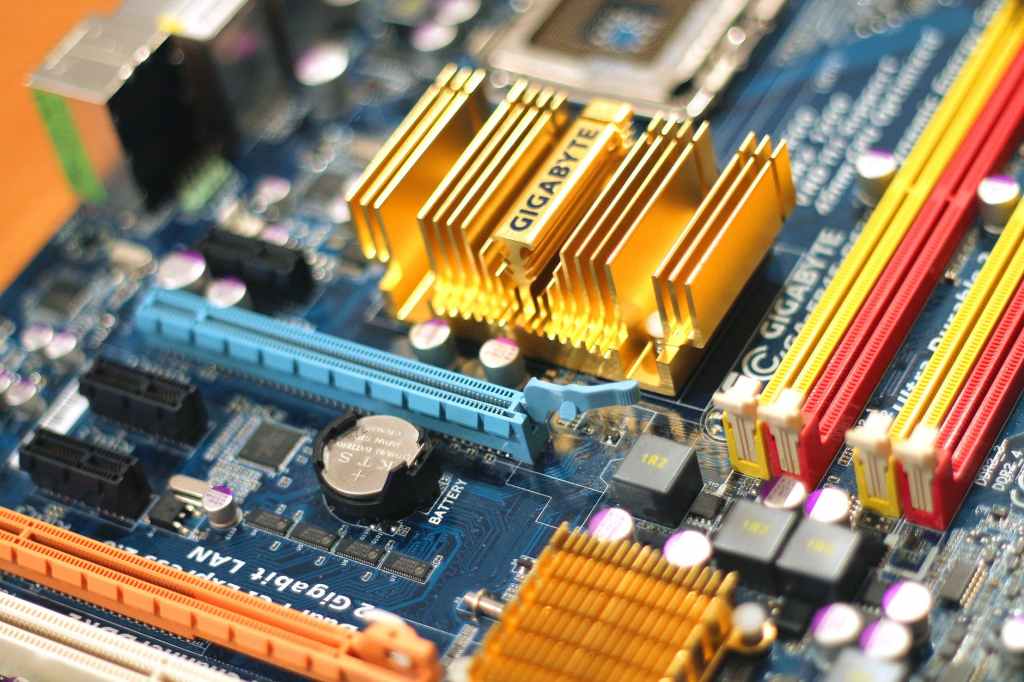
The database must store Big data which includes images that are captured from video cameras that are placed within the car that read things like road signs. It will also need to store all the roads the car drives on as well as the speed at which the car is traveling on that said road. Something else that the car will need to store would be average fuel consumption. The database would also need to capture how often the car uses its brakes and how often it steers. Data that should be collected as well would be how often the acceleration is used and seatbelt use within the car. A final piece of data that the database should store is how many times the user interferes with the driving of the car. 

Self-Driving cars are a closed loop system. All of the algorithms that are created based on the users previous driving are communicated back to the user. Images and information from the sensors travel through the main processor and it tells the car what to do via actuators. The computer that is within the car is educating the car so data that comes back to the car is based on real driver experiences. The cars use modeling to deal with all of the different scenarios that could possibly be faced with the car being driven. 

The Solution

Although the three solutions listed above may help reduce car crashes due to human error there is one major problem, humans will still be operating the vehicles themselves. Even if the laws on the road are tightened, the drivers exam gets more difficult to pass or people solely rely on car services to get around there still is the factor that humans are operating the vehicles. Humans are inherently flawed, we make mistakes no matter how hard we try not to, it is in our nature. As long as there are humans on the road driving, there will be accidents caused by human error. Unlike the other possible solutions, one solution that could almost completely take human error out of the equation would be the implementation of self-driving cars. Self-driving cars have been a major topic in the automotive and IS fields in recent years with many companies taking major technological leaps forwards. Tesla, one of the frontrunners in the self driving industry already has an autopilot feature in many of its models. While this feature is only intended for use on highways and freeways, the benefits of it are already showing. Tesla reported that people using their autopilot features while on highways reported an accident every 2.87 million miles, a number significantly lower than the average of a crash every 436,000 miles(Siddiqui). Tesla doesn’t plan on stopping at automated cars on highways though, Tesla plans on rolling out fully automatic vehicles that can detect stop signs, make sharp turns and park themselves. You would be able to tell your car your location, it would come pick you up, drop you off at your destination and park itself. This would fully take the human error problem out of the equation. 

Photo by SplitShire on Pexels.com

These fully automatic cars would stop accidents on a much greater scale than what was seen with Tesla’s cars on highways. It is reported that if 90 percent of cars were self-driving 4.2 million car accidents would be prevented per year. This could equate to about 21,700 deaths being prevented as well. People could feel safer in their travels without the worry of themselves or another human making a fatal accident on the road. Self-driving cars would not only prevent accidents and save lives but they would also save people billions of dollars. Like above, if 90 percent of people travelled in self driving cars around 400 billion dollars would be saved annually(Bell). Fully automated cars are becoming less and less of a thing of sci-fi and more of a reality. Due to major advances in technology by companies like Tesla and the minimal amount of regulation that currently exists  in implementing this technology into cars we could all be taking a nap or reading a book while our car drives us to work a lot sooner than we think.

Design a site like this with WordPress.com
Get started